
Polling As A Political Weapon: What The Seoul Mayor’s Indictment Reveals About South Korean Electoral Laws

By Jiwon Yu
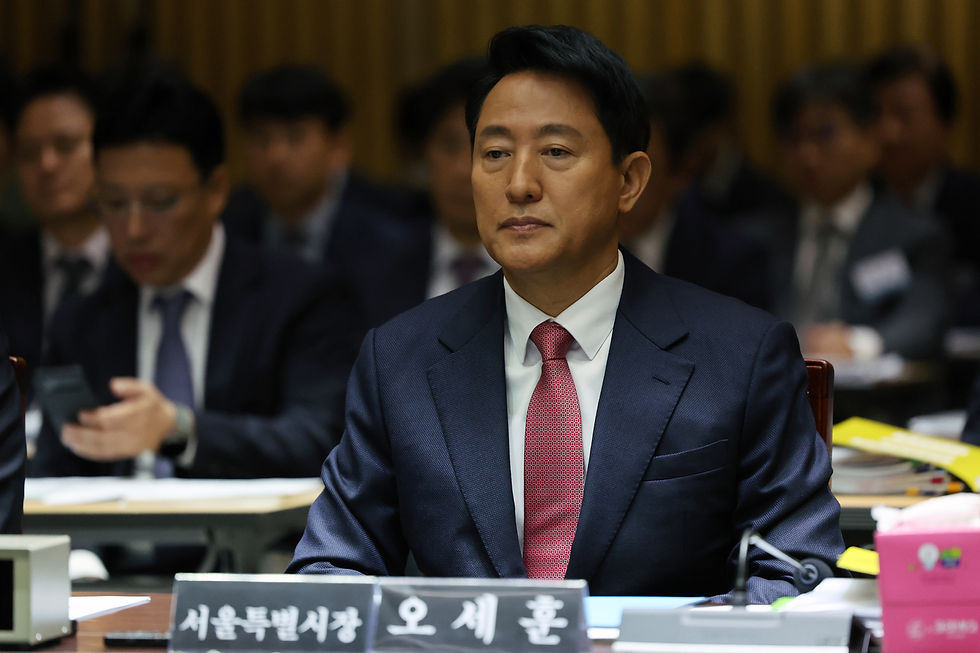
At the beginning of December 2025, South Korean prosecutor Min Joong-ki (Korean: 민중기) indicted Seoul’s mayor, People Power Party (PPP) politician Oh Se-hoon (Korean: 오세훈), on charges of violating the Political Funds Act (PFA) by manipulating ten public opinion surveys during the lead-up to the 2021 Seoul mayoral election. At the core of the indictment is a network of payments–KRW 33 million [USD 22,400] in total–made by businessman Kim Han-jung to the Future Korea Research Institute, a polling company operated by political broker Myung Tae-kyun (Korean: 명태균). Min’s team state these payments, made in five installments between February and March 2021, were intended to skew survey results used by the PPP to determine its mayoral candidate. Oh ultimately won the nomination and the subsequent election in April 2021.
To understand the severity of the issue, understanding the PFA is crucial. The PFA regulates the flow of funds used by political parties and their affiliates throughout their campaigns, with the goal of ensuring full transparency and preventing financial misconduct. It is designed, in relation to this case, to prevent the covert financing and political interference of national institutions in skewing results in favour of a particular candidate or party.
Yet, the unfolding scandal underscores that statutory text does not guarantee electoral integrity, nor does it necessarily provide the jurisdiction for independent councils to prevent such activity. After all, Mayor Oh denies having met Myung, whilst Myung asserts they have met on seven separate occasions to discuss polling results. Businessman Kim denies knowing Oh, but admits to sending funds to Myung’s polling firm on the basis that the latter would put in a good word for Oh with former President Yoon Suk-yeol. This is transaction hinges on the widely known premise that Myung is described as having close relations with the former President and First Lady, who have been charged for insurrection and bribery respectively.
Against this backdrop, the case raises significant questions regarding the legitimacy of elections within South Korea, and whether the capacity of Korea’s laws and institutions to prevent such electoral manipulation and fraud is sufficient.
Issue 1: Election and Democracy Legitimacy
The most pressing matter is the legitimacy of elections in South Korea. If the judicial court finds that the survey manipulations are true, and that it had a direct impact on Mayor Oh winning the 2021 Seoul mayoral election, this discovery then calls into question the system used to determine the field of candidates and whether voters’ opinions and ballots truly are the deciding factor.
Polls play an unusually influential role in South Korean political culture, especially in primaries and candidate selection. This is primarily due to the country being a trend-centred nation, where people are more likely to subscribe to the next trend. In the case of politics, they’re likely to follow electoral trends that they witness, hence the massive shift from left to right-wing politics seen in the 2022 national election, and vice versa in the 2025 national election. Yet, when moneyed interests can covertly influence these polls, democratic processes become vulnerable long before election day.
The fact that the misconduct occurred in early 2021 but was uncovered only at the end of 2025 further highlights a structural weakness: electoral corruption rarely emerges in real time. This delay raises broader questions about political accountability and whether similar schemes may have gone undetected in other races under previous administrations. If polling–one of the most visible indicators of electoral momentum–can be manipulated behind closed doors, voters are effectively participating in a game whose outcomes are partially pre-written.
Issue 2: The Power of Laws and the Limits of Enforcement Jurisdiction
The second issue concerns whether the PFA, and election law more broadly, possesses sufficient power to prevent ‘backdoor deals.’ The Act is designed to regulate formal political fundraising and expenditures, yet the alleged payments in this case involved a private businessman, a political broker, and a polling firm–none of whom were formally part of Oh’s campaign structure at the time, nor should have been. These indirect financial pathways reveal an enforcement blind spot: when political influence is purchased through intermediaries, proving candidate knowledge or intent becomes legally challenging.
Another concern is whether South Korea has a sufficient number of independent bodies capable of enforcing these laws neutrally. Much of the burden still falls on prosecutors, who investigate wrongdoing retrospectively rather than preventing it proactively. Without stronger independent regulatory institutions, enforcement remains uneven and often dependent on the political climate of the moment.
Conclusion
The indictment of Seoul’s mayor exposes critical vulnerabilities in South Korea’s legal and electoral systems. It calls into question the integrity of poll-driven candidate selection and highlights the inadequacy of existing legal safeguards against indirect political financing. Strengthening the PFA and enhancing institutional checks on prosecutorial power are essential steps toward restoring democratic confidence. Only through systemic reform can South Korea ensure that elections reflect the will of voters–not the influence of unregulated intermediaries behind the scenes.
Sources:
Edit by Artyom Timofeev


Comments