
Should Juries Be Abolished?

By Zohaa Khalid
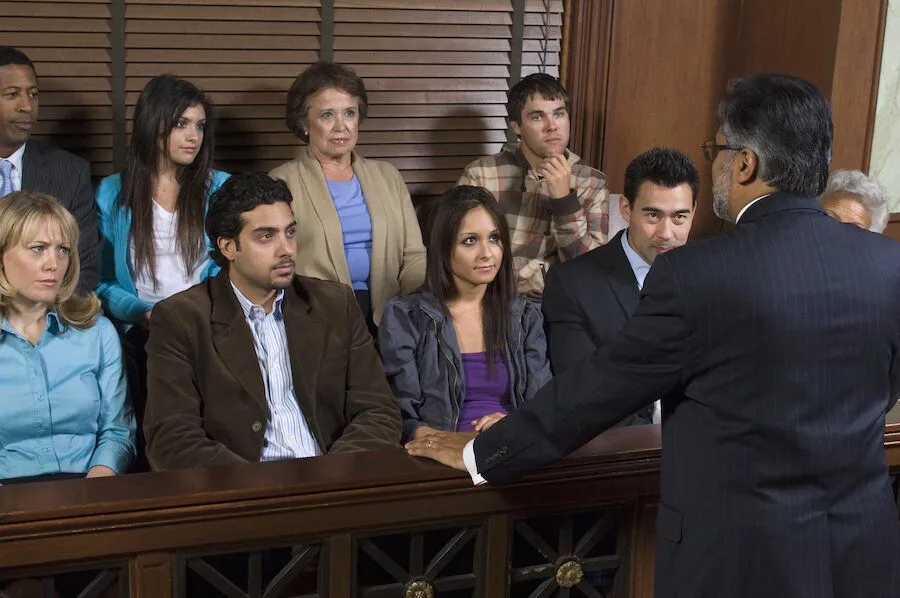
Juries are an integral part of the UK’s justice system, where the fate of individuals on trial for criminal charges depend largely on the verdict of the jurors. This has been a well-established method to discern one’s innocence for many centuries, even referenced by a charter as old as the Magna Carta:
“No free man shall be seized, imprisoned, dispossessed, outlawed, exiled or ruined in any way, nor in any way proceeded against, except by the lawful judgement of his peers and the law of the land.”
It is a legal obligation upon an individual to commit to jury service should they be summoned, for which the UK government’s official website outlines the general expectations. While the initial process of being selected and working as a juror may seem daunting, it has played a critical part in concluding the judgement of many cases; for instance, the jury’s response to the legal presentation of empirical evidence, client testimony and general arguments is important. However, many professionals in the legal field find reason to believe that juries themselves no longer serve the community with the same value and significance that they once did. Consequently, this article will explore a number of justifications for and against the necessity of using juries in court cases, and how these decisions may impact society as a whole.
Primarily, the largest issue at hand regarding court cases is not that of the jury itself, but rather the copious number of cases that have been backlogged since the Covid-19 pandemic. Due to the lockdown restrictions, it is notable that courts were not able to carry out their work for an extended period of time, as it was advised for people to stay home and socially distance to restrict the spread of the infectious virus. BBC News comments on this backlog in a 2025 article, clarifying that:
“More than 79,600 criminal cases are now caught in the courts backlog in England and Wales. The Crown Court has been at a record high since early 2023 and is projected to hit 100,000 by 2028, according to the Ministry of Justice (MoJ). The delays mean that for some serious crimes charged today, the victims and suspects could be left waiting years for justice, as they are unlikely to see the case come to trial before 2030.”
Initially, it is clear that the issue is not with the jury being inadequate to determine whether the defendant is guilty, but rather the sheer volume of cases that have been left unresolved in the lockdown time-frame that are still ongoing amidst all new cases. It emerges that the system’s real issue, as identified by The Bar Council, is that:
“Since the pandemic, receipts (cases coming in) have been greater than disposals (cases being concluded). Even where rates of disposal have been at their highest - and higher than they were even before the pandemic - rates of receipts have been higher still.”
In addition, there is no empirical evidence that suggests that removing juries can solve this backlog issue, as the delays are as a result of underfunding and infrastructure failures by the government as opposed to the jury system.
Furthermore, the dispute over the existence of juries heightens upon assessing the complex nature of certain cases. Overall, it is agreed by professionals that a judge is better equipped to manage cases with all the technical details, and Maclen Stanley from Psychology Today remarks on this:
“There is no doubt that the jury system has valiant aims. But I question if it still comports with today’s society. The reality is that juries are seldom impartial and seldom equipped to understand the issues before them. The entire process also imposes a burden upon citizens who must take time away from their jobs, worry about their potential safety, and potentially be traumatized with the evidence they observe or stigmatized by the decisions they make. Not to mention the extraordinary amount of time that is consumed by the jury process.”
It is rather startling to reflect upon the psychological impacts certain cases may have on the jury, as after all, their identity remains anonymous in order to keep the decision as neutral and fair as possible. This may mean that the court is unable to rule out any extenuating circumstances or prior traumatic history to protect the jury and prevent any emotional torment because of their anonymous identities. Moreover, the silent impartiality of all jury members is another concern, as in most scenarios, it is often impossible to eradicate all biases that result from media coverage, rumours, personal opinions or implicit biases. Rather than having a jury focus on the evidence provided, many may be tempted to employ their “common sense” even if the proof suggests otherwise, highlighting how implicit biases are another dilemma the court is faced by having a jury discern the final verdict. Nevertheless, it is notable that employing one’s “common sense” while observing and evaluating the facts is key to the job of a juror, and even encouraged by the UK government themselves, as there is no other formal training granted to those summoned. In addition, the technicalities of a case should always be explained in simpler terms to the jury and public gallery, as this is a responsibility that all legal counsel are required to fulfil in order to prevent any confusion or misunderstanding amidst the trial.
While juries have posed a significant risk in the just outcome of criminal cases, it is plausible to consider that they have a benefit to society, as juries are able to approach the matter at hand with a more conscience-based approach as opposed to a litigious approach. Considering the idea that most complicated and sophisticated laws could be cleverly manipulated by legal counsel, it is necessary to have members of the community present whose expertise does not surround civil laws, but rather who can ascertain the most appropriate conclusion with society’s general views. The Bar Council comments on this issue and understands that jury-less trials may further erode trust in the government’s justice system, as they will appear less representative and accountable to the common public’s thinking, and therefore could have “some serious potential risks to public confidence in the administration of justice”. In comparison, other institutions, such as education, handle the marking and grading of students’ exams by way of anonymous review by multiple examiners, so that each student’s final result is an average of a number of different professional opinions. Hence, would it not be preposterous if the fate of an individual’s entire life relies heavily on the opinion of one person alone (the judge), without any holistic consideration of the general public’s thoughts as well?
Moreover, the apprehension surrounding the vote of a jury extends to the nature of group deliberation, whereby individual opinion is no longer weighted equally with the dependency of unanimity. Brian R. Hedden expands on this in his article, proposing that while group deliberation may help jurors recall evidence and clarify misunderstandings about testimony or legal standards, it may encourage rogue jurors or unreasonable holdouts, as well as potentially risk the future of an individual, as if a vote is not unanimous because of even one juror, the verdict can be entirely changed, which would have lasting impacts. In further discussions, Hedden defends legal institutions (such as judges, appellate courts, and civil juries) who routinely make non-unanimous decisions without losing legitimacy, and therefore seeks to urge the government to consider having a similar level of scrutiny for the jury as well, allowing their individual voices to be granted influence as much as a jury’s unanimous vote or a judge’s final say.
In conclusion, while the jury system is not without its flaws, it remains a cornerstone of the UK’s justice system that continues to hold substantial value. Many of the criticisms directed at juries - such as delays, inefficiency, or a lack of technical understanding - are often rooted not in the concept of jury service itself, but in wider systemic issues, including court backlogs, underfunding, and post-pandemic pressures. Although judges may be better suited to manage highly complex legal matters, removing juries entirely risks distancing the justice system from the very society it serves. Juries provide a crucial link between the law and public conscience, reinforcing transparency, accountability, and trust in legal outcomes. Rather than abolishing juries, reform efforts should focus on improving infrastructure, providing better juror support, and reconsidering rigid requirements such as unanimity in verdicts. Ultimately, a justice system that balances professional legal expertise with informed public participation is more likely to remain fair, legitimate, and reflective of societal values.
Sources:
Casciani, Dominic. & Wainwright, Daniel. “How Did The Courts Backlog Get So Bad?” BBC News, BBC Verify, 2025, https://www.bbc.co.uk/news/articles/czdg7r8de2lo
Hedden, Brian R. “Should Juries Deliberate?” Social Epistemology, A Journal of Knowledge, Culture and Policy, Taylor & Francis Online, 2017 https://www.tandfonline.com/doi/full/10.1080/02691728.2016.1270364?scroll=top&needAccess=true#d1e103
Jenkins, Simon. “Our Justice System Is In Crisis, So Why Not Abolish Jury Trials?” The Guardian, 2021, https://www.theguardian.com/commentisfree/2021/jan/22/justice-system-crisis-abolish-jury-trials-covid
Stanley, Maclen. “Abolish the Jury?” Psychology Today, 2021, https://www.psychologytoday.com/gb/blog/making-sense-chaos/202111/abolish-the-jury
The Bar Council. “Juryless Trials ‘Not The Answer’ To Court Crisis, Barristers Warn,” Press Release, The Bar Council, 2025, https://www.barcouncil.org.uk/resource/juryless-trials-not-the-answer-to-court-crisis-barristers-warn.html
UK Government Website. “Jury Service,” Crime, Justice and the Law, Courts, Tribunals and Appeals, https://www.gov.uk/jury-service
UK Government Website. “Understanding the Jury Selection Process,” Inside HMCTS, HM Courts & Tribunals Service, Ministry of Justice, https://insidehmcts.blog.gov.uk/2024/05/07/understanding-the-jury-selection-process/
UK Government Website. “Going to Court as a Juror,” Crime, Justice and the Law, Courts, Tribunals and Appeals, https://www.gov.uk/jury-service/what-to-take-to-court
Edit by Artyom Timofeev
Image source: https://www.shouselaw.com/co/defense/process/grand-jury/


Muy buen contenido y bastante sencillo de seguir. Para quienes consultan los sorteos diariamente, loteria de hoy puede ser una búsqueda útil para encontrar las últimas novedades y resultados disponibles. La información presentada de forma ordenada facilita mucho la consulta para los lectores.
hi88 mình thấy bạn bè nhắc hoài nên bấm vào nghía thử cho biết, kiểu xem giao diện là chính chứ không có thời gian đọc kỹ. Vừa vào cái mình để ý ngay là bố cục chia thành từng khối nhìn khá thoáng, kéo xuống không bị rối hay “ngợp” chữ. Cái mình thích nữa là menu đặt khá dễ thấy, bấm qua lại giữa mấy mục cảm giác nhanh và liền mạch, không phải mất công tìm. Mấy chỗ hiển thị thông tin dạng bảng cột nhìn gọn gàng, liếc qua là nắm được ý chính. Nói chung nhìn một vòng thấy họ làm giao diện thân thiện cho người mới, không cần quen site vẫn biết nên…
mình có lần lướt đọc mấy trao đổi trên mạng شيخ روحاني thì thấy nhắc nên cũng tò mò mở ra xem thử cho biết. mình không tìm hiểu sâu chỉ xem qua trong thời gian ngắn để quan sát bố cục cách sắp xếp جلب الحبيب các mục và trình bày nội جلب الحبيب dung tổng thể. cảm giác là các phần được trình bày khá gọn, các hurentest berlin mục rõ ràng Huren Berlin nên đọc lướt cũng không bị rối với mình như vậy là đủ để nắm tin cơ bản rồi. جلب الحبيب
👍
Mình thường canh sát giờ quay số rồi mới vào xem soi cầu XSMB với soi cầu MB cho đỡ sốt ruột, kiểu cập nhật nhanh để yên tâm hơn. Mình hay xem qua thống kê lô gan, lô xiên, rồi đối chiếu lại mấy kỳ trước để tự cảm được nhịp ra số. Giữa lúc đó mình cũng liếc thêm dự đoán xsmb như một nguồn tham khảo phụ thôi, chứ không đặt nặng chuyện đúng sai. Trong nhóm mình nhiều người còn thích quay thử XSMB, Rồng Bạch Kim, kèm các bảng lịch sử để soi theo tần suất thực tế. Cá nhân mình thấy xổ số miền Bắc không hẳn chỉ dựa may mắn, mà còn phải…
Mình mua xổ số chủ yếu cho vui, kiểu giải trí thôi nên cũng không tự đặt mục tiêu phải trúng gì cả. Trước đây nghe bạn bè bàn tán chuyện “cầu” này “cầu” nọ, mình cũng tò mò nên thỉnh thoảng ngó qua xem họ nói có hợp lý không. Dạo này mỗi lần đọc mấy bài nhận định, mình hay ghi lại vài ý chính rồi chờ kết quả để so lại, coi thử mình có bị cuốn theo cảm giác quá không. https://soicauxsmb.io/so-ket-qua-60-ngay.html đôi khi mình mở ra xem thống kê cho có thêm dữ liệu, đỡ đoán mò. Có lúc trúng chút thì vui thật, nhưng cũng nhiều lần sai bét nên mình tự nhắc là…